Overview
The U.S. Army Engineer Research and Development Center (ERDC) seeks to obtain innovative solutions that can reduce the hazards of blast overpressure within buildings and protective structures. The intent is to identify external concepts or technologies with potential for rapid prototyping and evaluation in a blast testing environment. Addressing this enhanced protective infrastructure can help reduce risk and support the long-term health and safety of soldiers.
Background and Operational Scenarios
Military personnel are routinely exposed to blast overpressure during training and operational activities, which presents serious health and safety risks. ERDC is seeking innovative material and structural retrofit solutions to mitigate blast overpressure effects within enclosed environments such as rooms, facilities, or buildings.
Military training increasingly relies on realistic, immersive scenarios conducted within enclosed or semi-enclosed structures such as training facilities. In operational environments, soldiers shelter from adversary attack within enclosed or semi-enclosed structures such bunkers and buildings. In both training and operational environments, personnel may be exposed to blast overpressure, a rapid rise in air pressure caused by explosive events. Exposure to blast has been associated with both acute and long-term health effects, including traumatic brain injuries (TBI), auditory damage, and cognitive impairment. The relationship between blast exposure and health outcomes is not well understood.
Enclosed and semi-enclosed structures can amplify, reflect, and/or alter blast waves. Blast exposure in enclosed and semi-enclosed structures has been linked to known health outcomes of TBI. The goal is to reduce blast exposure inside structures without compromising mission realism in training, facility functionality in operations, and logistical burden in operations. Retrofit solutions must therefore balance effectiveness with ease of installation, scalability, and compatibility with existing military construction standards.
Project Manager
Geotechnical and Structures Laboratory (GSL), U.S. Army Engineer Research and Development Center (ERDC)
Requirements
ERDC invites pre-proposals that introduce solutions that can reduce the hazards of blast overpressure within buildings and protective structures.
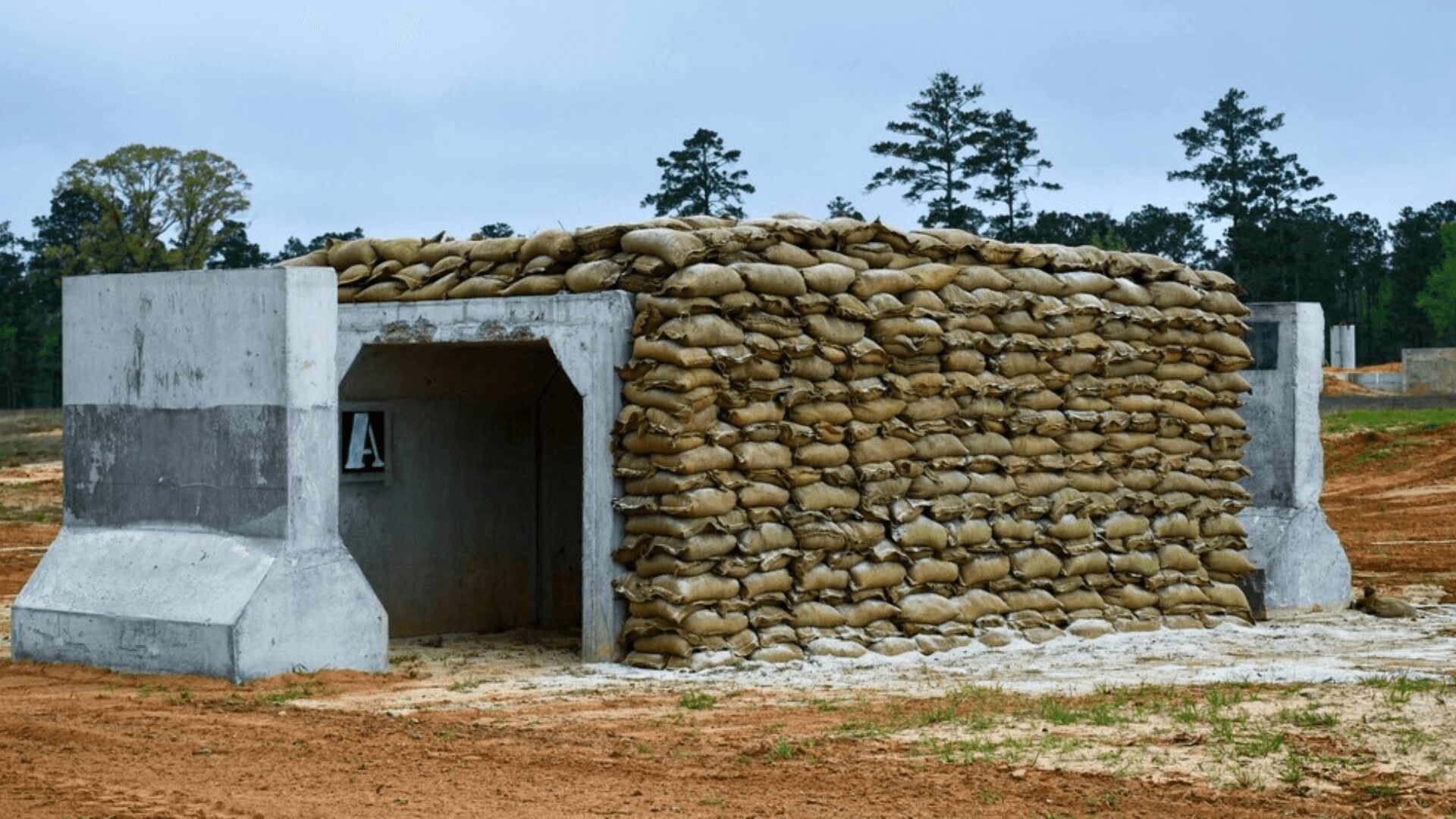
This effort seeks modular, adaptable protective solutions suitable for various operational structures such as bunkers, dug-in fighting positions, trenches, and training environments like shoot houses. Proposed solutions should be flexible enough to perform in a range of scenarios, focusing on survivability, rapid installation, and minimal interference with operational functionality.
The initial test scenario will involve a basic bunker structure with the following dimensions:
- 8.5 ft wide x 7 ft high x 15 ft long
- Two functional exits must remain accessible.
- Solutions may be applied to any part of the structure (e.g., inside wall, ceiling, exterior, or around entrances), provided personnel can still enter/exit without obstruction.
At a later stage, submitted prototype solutions will be tested using a standard evaluation approach aligned to each scenario. Solutions that demonstrate versatility, modularity, and protective performance across multiple environments will be prioritized.
Estimated Government Funding Profile
Up to $300,000 may be invested in potential prototype solutions that will be tested in experiments.
Estimated Period of Performance
Rapid prototyping is anticipated, with prototypes to be available within three months from award.
Expected Result
ERDC gains an understanding of material solutions and the effects of those solutions on the blast environment within structures.
Submissions may be shared as appropriate with other ERDC stakeholders. The government has the authority to decline all submitted proposals.
Evaluation Criteria
Submissions will be reviewed based on the criteria described in ERDC’s CSO Solicitation document by ERDC subject matter experts. Submissions may be shared as appropriate with other ERDC stakeholders. The government has the authority to decline all submitted proposals. The government does not plan to engage in the debrief process outlined in FAR part 15 but will provide feedback to unsuccessful offerors as appropriate and at its discretion.
Notional Project Schedule
Proposed project milestones include:
| November 24, 2025 | Project Announced, Submissions Open |
| December 15, 2025 | Question Period Ends, FAQ Document Finalized |
| December 22, 2025 | Submissions Close |
| December 22, 2025-January 9, 2026 | Review Period, Virtual Pitch Hosted (if needed) |
| February 27, 2026 | Offerors Notified of Potential Next Steps |
*Dates may vary to accommodate the project team and participant availability. The government may accelerate the pre-proposal review/feedback timeline, and therefore also require earlier delivery of full proposals.
Project Security Classification
This project announcement is unclassified.
How to Participate
Qualified parties may submit by completing a submission form and uploading required documentation as defined in the CSO Solicitation document.
- Review CSO Solicitation document
- Review FAQs
- Complete the submission form
Submission Instructions:
This solicitation is issued consistent with the authority granted to the U.S. Army Engineer Research and Development Center (ERDC) through the establishment of its Commercial Solutions Opening (CSO), W912HZ26SC001. Submissions must follow the requirements as detailed in the CSO Solicitation document.
Questions:
Interested parties may submit questions using this form until December 15, 2025.
Submissions must meet stated requirements and be received no later than 11:00 am CT on Monday, December 22, 2025.
ERDC GSL is conducting this project announcement on a full and open basis and intends to award contracts in accordance with FAR part 12 and the FAR part that is deemed most appropriate for the solution proposed (i.e. FAR part 13, 15, and/or 35); the government reserves the right to award prototype agreements (e.g. Other Transaction Agreements), in accordance with 10 U.S.C. 4022, if deemed appropriate and in the government’s best interest.