Overview
The U.S. Army Engineer Research and Development Center (ERDC) invites solutions to develop, test, and deploy in situ sensor technologies capable of continuous, real-time monitoring of dissolved reactive phosphorus (DRP) in freshwater systems. This effort aims to accelerate the transition of emerging technologies from concept to field-ready capability to support U.S. Army Corps of Engineers (USACE) Civil Works missions, including water quality management and harmful algal bloom (HAB) prevention, detection, and management.
Background
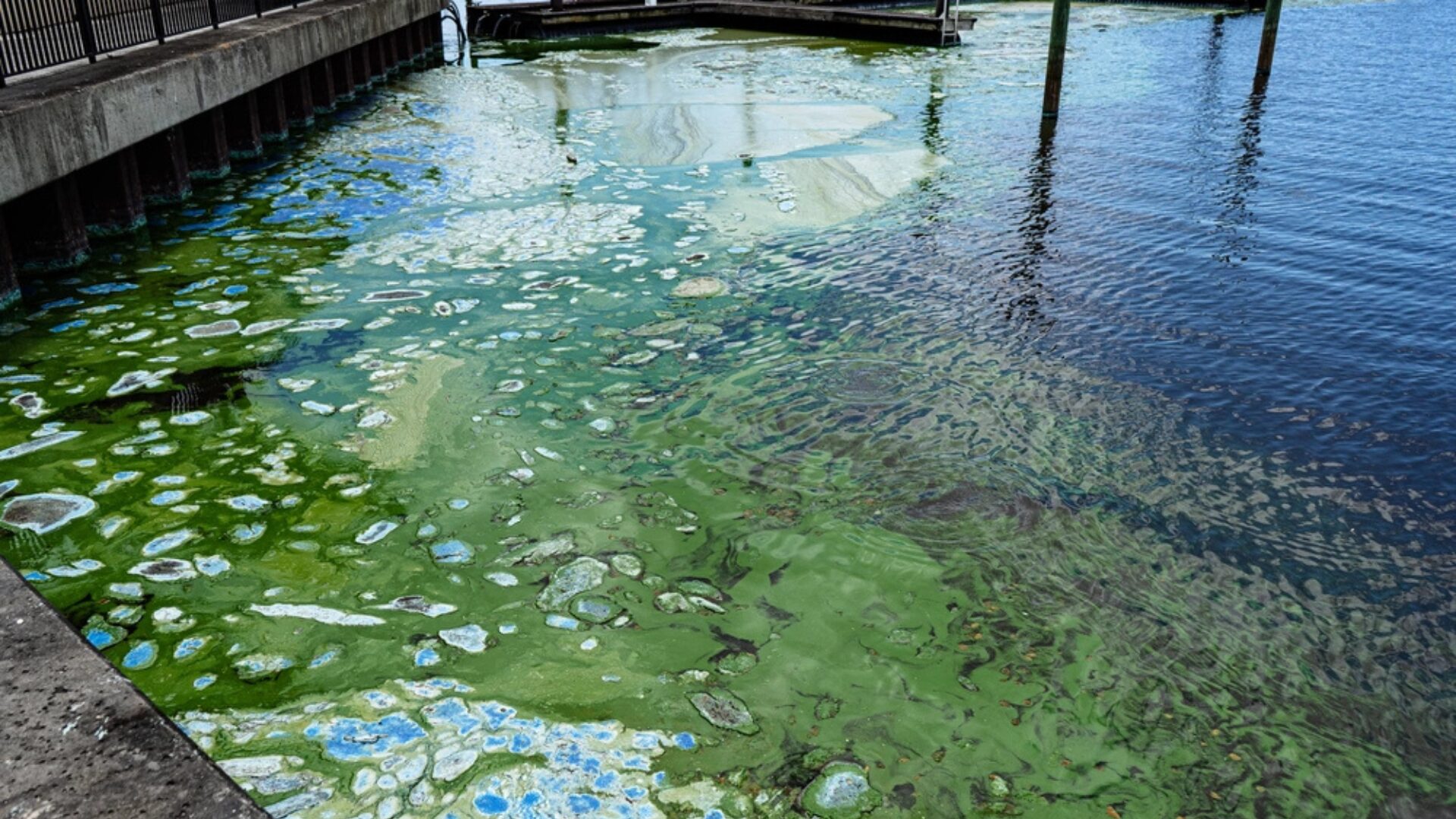
Excess nutrient loading, particularly DRP, poses a significant threat to the nation’s water resources. DRP is a primary catalyst for eutrophication and the formation of HABs, which degrade aquatic ecosystems, impact local economies, and can pose risks to human health. Current monitoring protocols, which largely depend on periodic grab sampling and subsequent laboratory analysis, are insufficient. This method is not only resource-intensive, but also fails to capture the high-frequency, event-driven fluctuations of DRP in waterways, creating a critical data gap. USACE requires robust, autonomous sensing solutions that provide continuous, high-frequency DRP data to enable proactive water management and rapid response.
Project Objective
The objective of this prototype project is to identify in situ sensor technologies capable of continuous, real-time monitoring of DRP in freshwater systems. This effort aims to accelerate the transition of emerging technologies from concept to field-ready capability to support USACE Civil Works missions, including water quality management and HAB prevention, detection, and management.
Project Manager
Environmental Laboratory (EL), U.S. Army Engineer Research and Development Center (ERDC)
Requirements
The capability has the following requirements:
- Continuously measure DRP concentrations in situ (target: sub-hourly resolution or better)
- Operate in freshwater environments (rivers, reservoirs, tributaries)
- Provide real-time or near real-time data transmission
- Maintain accuracy and precision comparable to laboratory methods
- Function with minimal maintenance and calibration over extended deployments
The capability should also demonstrate the following:
- Resistance to biofouling, turbidity, and environmental interference
- Low power consumption suitable for remote or long-term deployment
- Compatibility with existing USACE monitoring platforms and data systems
- Scalable manufacturing potential and cost-effective deployment at multiple sites
- Ability to integrate sensors with other nutrient flux measurement technologies to enable cost-effective nutrient (DRP especially, N also of interest) flux into freshwaters at both localized and very large scales.
All sensor formats are of interest for this prototype project. Innovative approaches may include (but are not limited to):
- Hybrid sensor platforms with AI/ML-enabled calibration or correction
- Wet-chemistry automated analyzers
- Optical or spectroscopic sensing
- Lab-on-a-chip or microfluidic systems
- Electrochemical detection methods
Applicants must be registered on SAM.gov. Submissions should NOT include confidential or proprietary details.
Estimated Government Funding Profile
Up to $825,000 is currently available for this requirement. The government anticipates fully funding the prototype project upon award.
More than one solution may be awarded within the limits of this funding profile. The government may fund portions of several offered solutions to achieve the desired end state.
The USACE, ERDC is using competitive procedures to select participants in a prototype transaction under 33 U.S.C 2313. If the prototype is determined successful, agencies may exercise authority under 33 USC 2313(c)(2) to provide for, and award, a follow-on production transaction or FAR based contract without additional competitive procedures.
Estimated Period of Performance
The full prototype design and demonstration is anticipated to take two years: design (1st year), demonstration (1st and 2nd year), and performance analysis and documentation (1st and 2nd year).
Expected Result
ERDC advances in situ sensor technologies that enable continuous, real-time monitoring of DRP in freshwater systems, creating significant opportunities for industry partners to develop, validate, and scale innovative solutions. This effort accelerates the transition of emerging technologies from concept to field-ready capability, supporting commercialization pathways while addressing critical needs in water quality management and HAB prevention, detection, and mitigation in support of USACE Civil Works missions.
Evaluation Criteria
White papers will be reviewed based on an integrated assessment of the following:
- The degree to which the solution meets the requirements of the desired objectives.
- The degree to which the potential delivery schedule meets the government’s stated period of performance.
- The review of potential impacts of the data rights assertions.
- The review of whether the white paper sufficiently demonstrates 1) significant participation by Non-Tranditional Defense Contractors (NDCs) or significant participation by non-profit research institutions, 2) all significant participants in the transaction other than the Federal Government are small businesses, or 3) at least one-third of the total cost of the prototype project is to be paid out of funds provided by parties other than the Federal Government.
Notional Project Schedule
Proposed project milestones include:
| April 24, 2026 | Project Announced, Submissions Open |
| May 4, 2026 | Question Period Ends |
| May 11, 2026 | Submissions Close |
| May 11-22, 2026 | Evaluation Period, Virtual Pitch Hosted (if needed) |
| June 2026 | Selected Participants Notified by ERDC of Request for Full Proposal |
*If needed; dates may vary to accommodate project team and participant availability. The government may accelerate the pre-proposal review/feedback timeline, and therefore also require earlier delivery of full proposals.
Project Security Classification
Unclassified
How to Participate
1. Review the complete solicitation
2. Review FAQs
3. Once the white paper is ready to submit, complete the submission form
Questions: Please send all technical and administrative questions using this form. FAQs will be updated periodically. It is the responsibility of the offeror to review FAQs prior to submitting.
Submissions must meet stated requirements and be received no later than 5:00 pm CT on May 11, 2026.
Submissions should NOT include confidential or proprietary details. Submissions will be reviewed by ERDC/government subject matter experts and may be shared as appropriate with other ERDC parties. The government has the authority to decline all submitted proposals. The government does not plan to engage in the debrief process outlined in FAR part 15, but will provide feedback to unsuccessful offerors as appropriate and at its discretion.
ERDC seeks to enter into non-FAR or FAR-based agreements with Industry, Academia, and National Lab partners whose solutions are favorably evaluated. As such, this project is considered competitive in the same manner as a Broad Agency Announcement (BAA) or Commercial Solutions Opening (CSO), and solutions will be evaluated independently of one another primarily for technical merit. Notice: IAW 10 U.S.C. 4022(f), a follow-on, noncompetitive, Production OT may be awarded following the successful completion of a Prototype OT.