Overview
The U.S. Army Engineer Research and Development Center (ERDC) is seeking to identify available and emerging technologies that can be applied to autonomous dredging operations. This initiative aims to survey state-of-the-art in autonomous systems capable of sediment removal, transport, and placement.
Background
The U.S. Army Corps of Engineers (USACE) has identified autonomous dredging as a near-term possibility with long-term potential for implementation into standard operations. To make progress toward this goal, the project is focusing on several key operational scenarios that isolate the core requirements of sediment movement, transport, and placement, while minimizing current complexities like navigating in strong currents or remote power supply.
Respondents are encouraged to propose solutions applicable to the following scenarios:
- Sediment Removal at Reservoirs: Systems designed to manage sediment accumulation in reservoir environments.
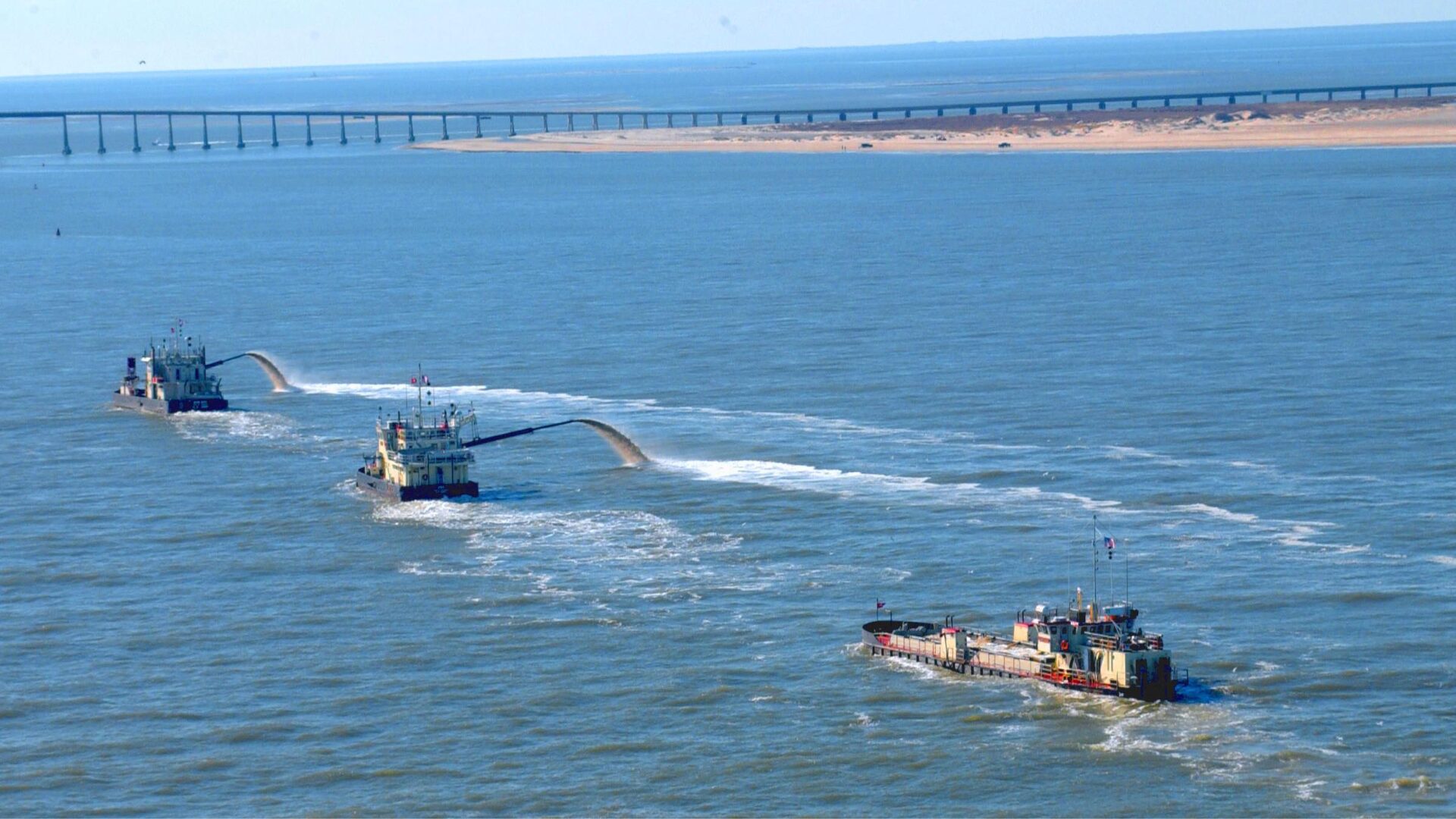
- Sand Bypassing: Technologies for bypassing sand around coastal inlets to maintain navigation and protect shorelines. A key example is the sand bypassing plant at the Indian River Inlet, DE.
- Dredging Near Berths: Solutions for removing sediment in and around vessel berths and port infrastructure.
While the initial focus is on these controlled scenarios, USACE is also interested in technologies that address the more difficult challenges inherent in dredging, such as station-keeping in strong currents, hazard detection and avoidance, and remote power management. It is assumed that most USACE dredging will continue to be performed by contractors, and this effort seeks to understand the technologies contractors may develop or that USACE could specify for future work.
Project Objective
This Individual Program Requirement (IPR) seeks to identify and assess existing and emerging autonomous and semi-autonomous dredging systems. ERDC will gain a comprehensive understanding of industry capabilities, Technology Readiness Levels (TRLs), and potential partners for future collaboration, demonstration, and implementation efforts.
Project Manager
Coastal and Hydraulics Laboratory (CHL), U.S. Army Engineer Research and Development Center (ERDC)
Requirements
ERDC invites pre-proposals that introduce solutions addressing the goals described above. All potential solutions will be considered against the program requirements and technology readiness levels.
To be considered, a pre-proposal must clearly:
- Be capable of autonomous or semi-autonomous operation for dredging or related functions (e.g., surveying, transport)
- Address at least one of the core functions: sediment movement, transport, or placement
- Describe the current Technology Readiness Level (TRL) of the proposed solution
Not required, but highlight desired:
- Solutions directly applicable to one of the target operational scenarios (reservoirs, sand bypassing, berths)
- Technologies that address known dredging challenges such as station-keeping, hazard detection, and remote power
- Systems with a defined path toward a pilot-scale demonstration
Applicants must be registered on SAM.gov. Submissions should NOT include confidential or proprietary details.
Estimated Government Funding Profile
Funding is not currently available for this project. Successful solutions may be considered for future follow-on collaborations.
All resultant contracts will be firm-fixed price. All items, technologies, and services (including research and development) procured via this CSO are treated as commercial. The Contracting Officer must determine the price fair and reasonable prior to award.
Estimated Period of Performance
The period of performance for any follow-on collaborative efforts will be determined based on the nature and maturity of the proposed solution.
Desired End State
Through this technology-scouting effort, ERDC will gain a comprehensive understanding of the current state-of-the-art in autonomous dredging systems and identify potential partners for future research, development, and operational pilots.
Evaluation Criteria
Submissions will be reviewed based on the criteria described in ERDC’s Civil Works CSO Solicitation document by ERDC subject matter experts. Submissions may be shared as appropriate with other ERDC stakeholders. The government has the authority to decline all submitted proposals. The government does not plan to engage in the debrief process outlined in FAR part 15 but will provide feedback to unsuccessful offerors as appropriate and at its discretion.
Notional Project Schedule
Proposed project milestones include:
| May 7, 2026 | Project Announced, Submissions Open |
| May 25, 2026 | Question Period Ends |
| June 3, 2026 | Submissions Close |
*Dates may vary to accommodate project team and participant availability. The government may accelerate the pre-proposal review/feedback timeline, and therefore also require earlier delivery of full proposals.
Project Security Classification
Unclassified
How to Participate
- Review CSO Solicitation document
- Review FAQs
- Complete the submission form
Submission Instructions: This solicitation is issued consistent with the authority granted to the U.S. Army Engineer Research and Development Center (ERDC) through the establishment of its Commercial Solutions Opening (CSO), W912HZ26SC003. Submissions must follow the requirements as detailed in the CSO Solicitation document.
Questions:
Interested parties may submit questions using this form until May 25, 2026.
Submissions must meet stated requirements and be received no later than 4:00 pm CT on June 3, 2026.
ERDC-CHL is conducting this project announcement on a full and open basis and intends to award contracts in accordance with FAR part 12 and the FAR part that is deemed most appropriate for the solution proposed (i.e. FAR part 13, 15, and/or 35); the government reserves the right to award prototype agreements (e.g. Other Transaction Agreements), in accordance with 10 U.S.C. 4022, if deemed appropriate and in the government’s best interest.