Overview
The U.S. Army Engineer Research and Development Center (ERDC) seeks to identify and investigate emerging solutions that can help the U.S. Army Corps of Engineers (USACE) incorporate continuous fiber-reinforced additive manufacturing (CF-AM) technologies into future Civil Works infrastructure fabrication and replacement workflows.
Project Manager
Geotechnical and Structures Laboratory (GSL), U.S. Army Engineer Research and Development Center (ERDC)
Project Objective
The objectives of this Individual Program Requirement (IPR) are to assist ERDC and its Civil Works customers, including USACE, in the identification of potential innovative solutions (e.g., continuous fiber-reinforced additive manufacturing processes, large-format printing systems, reinforced thermoplastic and thermoset material systems, and associated design/analysis workflows, etc.) that can be evaluated for their technical feasibility and performance. Comprehensive information is required to evaluate emerging solutions that can produce large-scale, structurally capable components suitable for Civil Works infrastructure applications, with predictable performance, durability, and manufacturability.
Background and Operational Scenarios
Potential technologies and methodologies that may be implemented to support future Civil Works infrastructure fabrication include CF-AM processes, large-format composite printing systems, automated reinforcement placement, and hybrid additive/subtractive workflows. These approaches offer the potential to produce structurally capable, corrosion-resistant, and geometrically complex components in environments where traditional fabrication is slow, costly, or impractical.
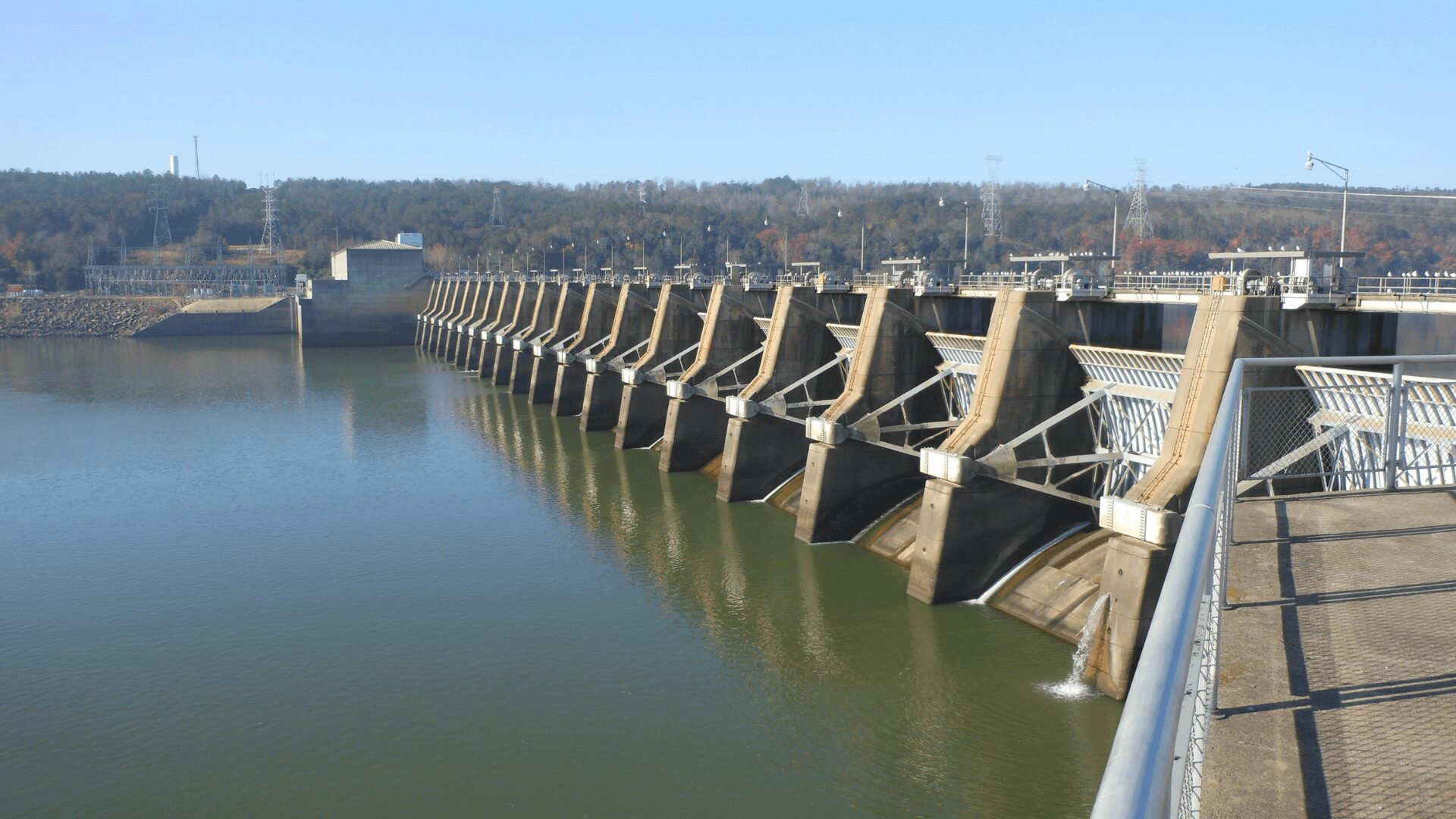
Civil Works infrastructure, including locks, dams, levees, stormwater structures, coastal features, and access components, often exists in remote, constrained, or wet environments where conventional steel and concrete are difficult to fabricate or maintain. CF-AM may enable rapid fabrication of replacement components, production of large or custom geometries without extensive tooling, and the development of lightweight, durable composite elements tailored for long-term service.
CF-AM presents a potential pathway to produce structural and semi-structural components with high strength-to-weight performance, corrosion resistance, and geometry flexibility. However, the suitability of CF-AM technologies for manufacturing large-scale Civil Works components remains largely unvalidated. There is currently no clear understanding of which CF-AM platforms, material systems, and process capabilities can reliably deliver components that meet the performance, durability, and size requirements of Civil Works applications.
Research is needed to fill knowledge gaps and to demonstrate the usage of solutions at scales, geometries, and performance levels relevant to Civil Works missions. This includes understanding material behavior, structural capability, environmental durability, and manufacturing constraints unique to CF-AM. Furthermore, where novel strategies are identified, further research will be performed to validate manufacturing workflows, develop property datasets, and assess feasibility for producing full-scale or near full-scale components.
Requirements
Of particular interest are emerging CF-AM technologies that are currently operational, commercially available, or approaching deployment readiness.
ERDC is seeking solutions with a Technology Readiness Level (TRL) of 5-7 that can be evaluated through material characterization, structural testing, and, when possible, full-scale or near full-scale demonstrations.
The following criteria are requested to be addressed in RFI responses:
- Description of the CF-AM technology or manufacturing solution, including process type, reinforcement format, and compatible material systems.
- Vendor or developer information, including points of contact, relevant experience, commercial maturity, and existing deployment history.
- Engineering specifications, such as build volume, reinforcement placement method, material properties, achievable fiber volume fraction, dimensional tolerances, and mechanical performance data (if available).
- Examples of prior implementations or manufactured components, including any structural, industrial, or large-format applications.
- Manufacturing and operational requirements, including equipment footprint, power needs, labor skill level, post-processing, quality assurance methods, and any specialized tools or environmental controls.
- Cost information, including estimates of system cost, material cost, production rate, and any known factors affecting scalability or economic viability.
Preferred solutions are economically feasible, robust under a range of operating conditions, and scalable to produce components that may range from several feet to tens of feet in size. These criteria will enable ERDC to fully assess the potential of CF-AM technologies for future integration into Civil Works infrastructure fabrication and replacement workflows.
Estimated Government Funding Profile
Up to $400,000 may be awarded in FY26 to cover materials cost for Federal lab testing. This project does not commit the Government or ERDCWERX to pay any costs incurred in preparation of a response or guarantee a contract.
*Multiple solutions may be awarded with these funds
Estimated Period of Performance
The estimated period of performance will be for the Winter-Spring of FY26, with a potential follow-on effort in Phase II.
Expected Result
ERDC gains an understanding of the current solutions available in continuous fiber-reinforced additive manufacturing, including their capabilities, limitations, material systems, and scalability for Civil Works applications. Solution briefs will describe the technical feasibility of proposed emerging technologies, inform follow-on testing needs, and identify vendors capable of producing components or coupon-level samples for future evaluation.
Evaluation Criteria
Submissions will be reviewed based on the criteria described in ERDC’s CSO Solicitation document by ERDC or other Government subject matter experts. Submissions may be shared as appropriate with other ERDC stakeholders.
The government has the authority to decline all submitted proposals. The government does not plan to engage in the debrief process outlined in FAR part 15, but will provide feedback to unsuccessful offerors as appropriate and at its discretion.
Notional Project Schedule
Proposed project milestones include:
| January 13, 2026 | Project Announced, Submissions Open |
| February 6, 2026 | Question Period Ends |
| February 13, 2026 | Submissions Close |
| February 16-27, 2026 | Review Period, Virtual Pitch Hosted (if needed) |
| March 2026 | Selected Solutions Assessed by ERDC |
| Spring/Summer 2026 | Potential Coupon-level Component Fabrication/Mechanical Evaluation |
*Dates may vary to accommodate the project team and participant availability. The government may accelerate the pre-proposal review/feedback timeline, and therefore also require earlier delivery of full proposals.
How to Participate
- Review CSO Solicitation document
- Review FAQs
- Complete the submission form
Submission Instructions: This solicitation is issued consistent with the authority granted to the U.S. Army Engineer Research and Development Center (ERDC) through the establishment of its Commercial Solutions Opening (CSO), W912HZ26SC003. Submissions must follow the requirements as detailed in the CSO Solicitation document.
Questions: Interested parties may submit questions using this form until February 6, 2026.
Submissions must meet stated requirements and be received no later than 10:00 am CT on Friday, February 13, 2026.
All resultant contracts will be firm-fixed price. All items, technologies, and services (including research and development) procured via this CSO are treated as commercial. The Contracting Officer must determine the price fair and reasonable prior to award. ERDC is conducting this project announcement on a full and open basis and intends to award contracts in accordance with FAR part 12 and the FAR part that is deemed most appropriate for the solution proposed (i.e. FAR part 13, 15, and/or 35); the government reserves the right to award prototype agreements (e.g. Other Transaction Agreements), in accordance with 10 U.S.C. 4022, if deemed appropriate and in the government’s best interest.