Overview
The U.S. Army Engineer Research and Development Center (ERDC) invites solutions for modernizing the Army’s Prime Power capability through the integration of Battery Energy Storage Systems (BESS) with legacy generator assets. This project seeks to enhance the resilience, efficiency, and sustainment of tactical electrical grids by hybridizing the MEP‑810D diesel generator with advanced energy storage technologies.
Background
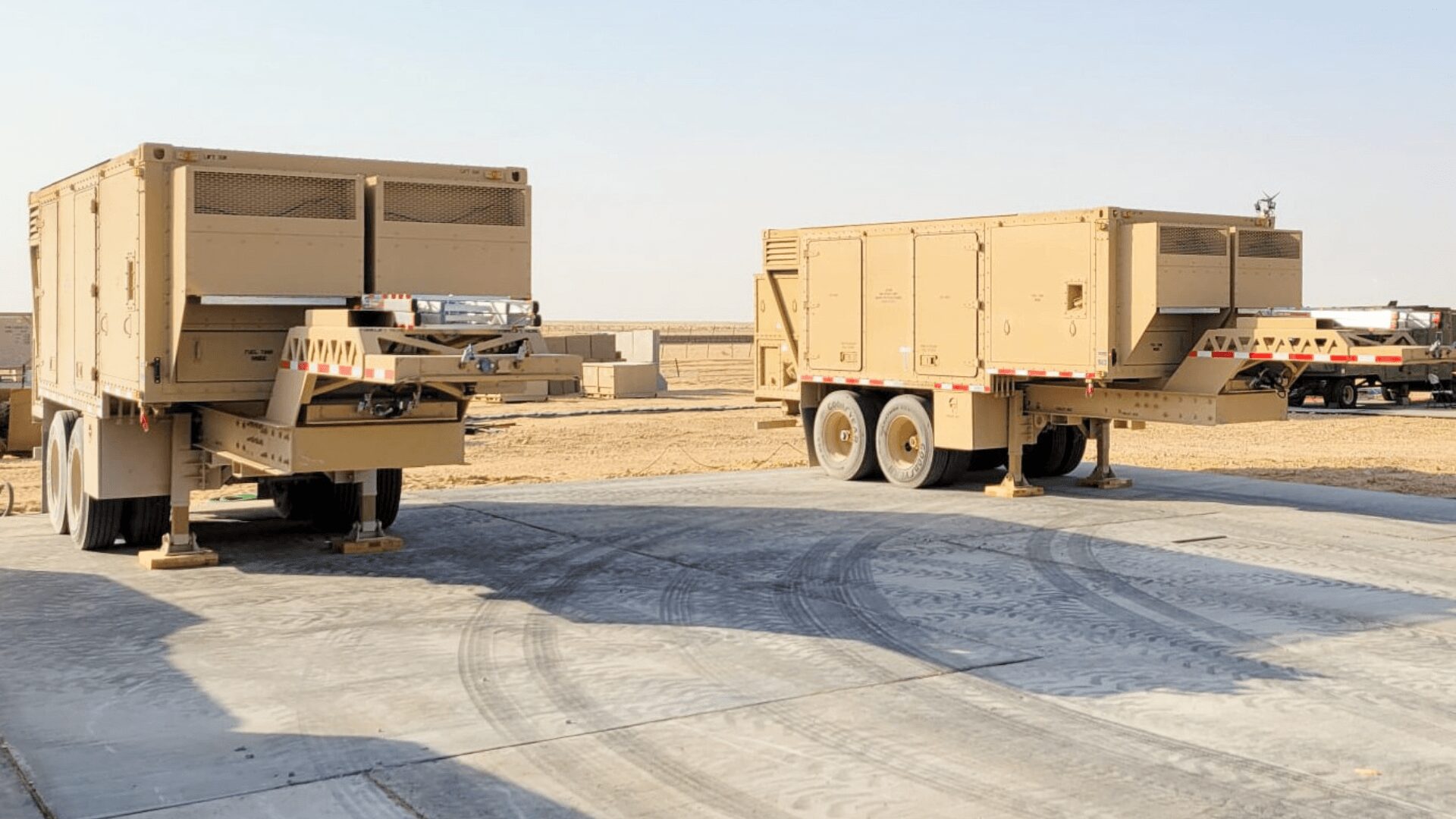
The Army’s Prime Power capability, primarily executed by the highly specialized 249th Engineer Battalion, was established to meet the ever-increasing electrical demands of a modern, technology-driven military. These soldiers undergo extensive training to deploy and manage medium-voltage electrical grids in tactical environments worldwide. A core legacy asset in this mission is the MEP-810D, a large diesel generator that reflects a traditional, generator-centric power strategy.
These generators are often forced to run continuously and inefficiently, even during periods of low demand, simply to maintain grid presence. This practice not only leads to excessive fuel consumption and amplifies the logistical burden of sustaining power at the tactical edge but also results in significant engine wear.
Integrating a BESS with legacy assets like the MEP-810D power plant represents a significant leap forward in modernizing the Army’s Prime Power capabilities. This hybrid approach unlocks substantial benefits in resilience, fuel efficiency, and maintenance.
By pairing the MEP-810D with a BESS, the tactical grid gains a powerful layer of resilience. The BESS acts as an instantaneous, uninterrupted power supply (UPS), seamlessly bridging any power gaps caused by generator maintenance, refueling, or unexpected shutdowns. This ensures that critical command and control systems receive continuous, uninterrupted power, safeguarding them from data loss or failure and enhancing overall mission continuity.
The most significant advantage is in fuel efficiency. The BESS enables intelligent “load-leveling,” allowing the MEP-810D to operate at its peak efficiency to power loads and charge the battery. During periods of low demand, the MEP-810D can be shut down completely, with the BESS silently providing the necessary power. This operational strategy drastically reduces the generator’s total runtime, leading to dramatic fuel savings and a corresponding reduction in the logistical footprint required to transport fuel to the field.
This reduction in runtime directly translates to significant maintenance benefits. By minimizing the operational hours of the MEP-810D, the BESS lessens engine wear and tear, lowers the frequency of required maintenance, and ultimately extends the operational lifespan of the Army’s valuable legacy power assets.
Project Objective
The primary objective is to assess the current Commercial-Off-the-Shelf (COTS) system capabilities and then modify the COTS to a BESS capable of seamless interoperability with the Army’s 4160V prime power architecture. A critical technical requirement is that this system must autonomously integrate with legacy assets like the MEP-810D power plant without needing constant soldier intervention. The desired capability is a resilient system that functions as an uninterruptible power supply (UPS) and an “electrical shock absorber” to ensure grid stability for sensitive equipment. This process will improve efficiency by enabling “load-leveling,” allowing generators to run at peak performance or shut down during low demand, which in turn will drastically reduce fuel consumption and lower maintenance costs by minimizing engine runtime. The goal is the delivery and operational validation of a modernized, ruggedized BESS prototype that has been proven ready for future procurement and mission use.
Project Manager
Construction Engineering Research Laboratory (CERL), U.S. Army Engineer Research and Development Center (ERDC)
Requirements
Desired attributes of the prototype are as follows:
- The BESS must be designed for direct physical and electrical integration into a dedicated circuit “way” within the 4160V Primary Switching Center (PSC) NSN: 6110-01-493-3391. This connection shall be made via a medium-voltage, three-phase circuit breaker appropriately rated for the application. Critically, this breaker must be equipped with advanced protective relays specifically programmed to handle bi-directional power flow, as the BESS will both draw power from and supply power to the PSC bus. These relays must provide comprehensive protection against faults including over and under voltage, over and under frequency, overcurrent, and reverse power.
- The BESS must feature fully automated synchronization capability. This system will continuously monitor the PSC bus voltage, frequency, and phase angle, ensuring its own inverter output is a perfect match before permitting the circuit breaker to close. This prevents catastrophic damage that would result from connecting unsynchronized sources.
- The BESS must provide a standard communication interface, such as Modbus TCP/IP or CAN bus, to allow a master Microgrid Controller to manage its operation and initiate the synchronization sequence. For personnel safety, the BESS enclosure and all electrical components must be securely bonded to the PSC’s common grounding system.
- The main isolating device for the BESS must be designed to accommodate a physical lock and tag under Lockout/Tagout (LOTO) procedures, ensuring the system can be safely de-energized and isolated for maintenance.
- The BESS must be capable of sustained and effective operation in harsh desert climates, similar to those found in the U.S. Central Command (CENTCOM) Area of Responsibility (AOR). The system must be able to withstand and function optimally in a wide range of ambient temperatures, from below freezing to 130°F (54°C).
- The system’s design must account for the challenges of a degraded visual environment (DVE) caused by sand and dust storms, ensuring continued operation and safety. The BESS must be resilient to airborne particulates, including sand and dust, which are common in this region and can negatively impact equipment performance and longevity.
- The BESS will be subjected to rigorous testing under extreme heat conditions, with temperatures averaging over 100°F, to validate its suitability, reliability, and maintainability in these demanding environments.
- The proposed BESS must be an advanced, commercially developed solution designed to create a more resilient, efficient, and stable tactical power grid.
- The system should address at least one of the three primary use cases:
- Provide a continuous, uninterruptible power supply.
- Stabilize power quality and grid frequency by absorbing electrical fluctuations.
- Boost fuel efficiency by using smart generator controls, running them at peak performance or shutting them down when demand is low
- The core of the system must be a high-performance battery, specified as Lithium Iron Phosphate (LFP) or better, with a long operational life of over 6,000 cycles at an 80% depth of discharge and a high round-trip efficiency exceeding 92%.
- The system must be configurable for 4160V AC, 3-Phase, 60 Hz operation to integrate with the Army’s Prime Power Distribution network
- For the 480V BESS, proposals must include a comprehensive plan for stepping up and down the voltage to integrate with the 5kV-class PSC switchgear.
- The system must have a usable energy capacity of at least 1MW.
- The power conversion System is required to have a continuous power rating of at least 1MW
- The power conversion must demonstrate an overload capability of 125% for ten minutes (1.2 MW).
- A minimum Energy storage of 2MWh
- A Battery Management System (BMS) for cell-level monitoring of voltage, current, and temperature. It must also provide automatic protection against over-charge, over-discharge, and thermal runaway.
- The entire system must be housed in a rugged, outdoor-rated NEMA 3RX enclosure (or better) with an integrated thermal management system.
- A power conversion system that is Grid forming or Grid following operation mode, both are preferable
- A power conversion system that has four quadrant power factor control operations
- The integrated system must be certified to UL 9540, with the batteries certified to UL 1973 and the PCS certified to UL 1741.
Offerors must be capable of design, management, and assembly of all aspects of the prototype.
Applicants must be registered on SAM.gov. Submissions should NOT include confidential or proprietary details.
Estimated Government Funding Profile
Up to $6,000,000 and support alignment is currently available for this requirement. The selected industry partners will be fully funded to execute the modernization in FY26. Multiple $1-2 million awards are anticipated.
The USACE, ERDC is using competitive procedures to select participants in a prototype transaction under 33 U.S.C 2313. If the prototype is determined successful, agencies may exercise authority under 33 USC 2313(c)(2) to provide for, and award, a follow-on production transaction or FAR based contract without additional competitive procedures.
Estimated Period of Performance
The estimated period of performance for this prototype is 12 to 18 months. The final duration within this range is contingent upon the level of modernization required to adapt the selected COTS system to meet the specific operational requirements.
Given that this represents a rapidly needed capability for field operations, the development timeframe is critical. The established schedule will be strictly adhered to, and all milestones will be closely monitored to ensure timely delivery and deployment.
Expected Result
ERDC gains an understanding of the engineering requirements, performance capabilities, and integration challenges of adapting a high-capacity COTS BESS for tactical military microgrids. By subjecting a commercial system to extreme temperatures (up to 130°F) and sand and dust storms typical of the CENTCOM Area of Responsibility, this project will validate how commercial innovation can meet rigorous, mobile military demands.
The research focuses on closing the gap between standard commercial capabilities and the realities of a deployed microgrid. We will learn how to autonomously integrate modern BESS technology with legacy prime power assets, such as the MEP-810D, eliminating the need for constant soldier intervention. The project will yield critical data on using the system to stabilize grids, manage bi-directional power flow, and safely execute automated synchronization. Furthermore, we will gain vital insights into the thermal management and physical ruggedization necessary to protect sensitive electronics during major power fluctuations in degraded environments.
Within the rapid 12 to 18-month timeframe and a limited funding profile, the project will deliver a fully functional, ruggedized prototype. Housed in a NEMA 3RX enclosure, the system will feature Lithium Iron Phosphate (LFP) batteries, or better, delivering a minimum of 2MWh of energy storage and a 1MW continuous power rating, complete with a 1.2 MW overload capability for ten minutes. It will be explicitly configured for 4160V AC, 3-Phase, 60 Hz operation to integrate directly into the Primary Switching Center (PSC) via a smart, bi-directional medium-voltage breaker.
To ensure maximum safety and reliability, the prototype will incorporate a comprehensive Battery Management System (BMS) for cell-level monitoring and meet strict certifications (UL 9540, 1973, and 1741). Ultimately, this effort will provide the blueprint for whether a modified COTS solution can successfully deliver a resilient, stable, and fuel-efficient tactical power network capable of surviving the military’s most demanding operational environments.
Evaluation Criteria
White papers will be reviewed based on an integrated assessment of the following:
- The degree to which the solution meets the requirements of the desired objectives.
- The degree to which the potential delivery schedule meets the government’s stated period of performance.
- The review of potential impacts of the data rights assertions.
- The review of whether the white paper sufficiently demonstrates 1) significant participation by Non-Traditional Defense Contractors (NDCs) or significant participation by non-profit research institutions, 2) all significant participants in the transaction other than the Federal Government are small businesses, or 3) at least one-third of the total cost of the prototype project is to be paid out of funds provided by parties other than the Federal Government.
Notional Project Schedule
Proposed project milestones include:
| May 11, 2026 | Project Announced, Submissions Open |
| May 26, 2026 | Question Period Ends |
| May 29, 2026 | Submissions Close (Deadline Extended) |
| June 8, 2026 | Evaluation Period, In-Person Pitch and Demonstration Hosted |
| June 15, 2026 | Selected Participants Notified by ERDC of Request for Full Proposal |
*If needed; dates may vary to accommodate project team and participant availability. The government may accelerate the pre-proposal review/feedback timeline, and therefore also require earlier delivery of full proposals.
Project Security Classification
Unclassified
How to Participate
1. Review the complete solicitation
2. Review FAQs
3. Once the white paper is ready to submit, complete the submission form
Questions: Please send all technical and administrative questions using this form. FAQs will be updated periodically. It is the responsibility of the offeror to review FAQs prior to submitting.
Submissions must meet stated requirements and be received no later than 4:00 pm CT on May 29, 2026.
Submissions should NOT include confidential or proprietary details. Submissions will be reviewed by ERDC/government subject matter experts and may be shared as appropriate with other ERDC parties. The government has the authority to decline all submitted proposals. The government does not plan to engage in the debrief process outlined in FAR part 15, but will provide feedback to unsuccessful offerors as appropriate and at its discretion.
ERDC seeks to enter into non-FAR or FAR-based agreements with industry, academia, and national lab partners whose solutions are favorably evaluated. As such, this project is considered competitive in the same manner as a Broad Agency Announcement (BAA) or Commercial Solutions Opening (CSO), and solutions will be evaluated independently of one another primarily for technical merit. Notice: IAW 10 U.S.C. 4022(f), a follow-on, noncompetitive, Production OT may be awarded following the successful completion of a Prototype OT.