

Overview
The U.S. Army Engineer Research and Development Center (ERDC) seeks expert technical support and innovation to develop a new application for natural and hybrid infrastructure (NHI) technology and methodology for NHI placement in a complex landscape in the northeastern-most region of the continental United States. The goal of this effort is to identify solutions capable of reducing shoreline erosion and improving resilience through integrated NHI and conventional designs that meet performance, regulatory, and cost requirements.
Background
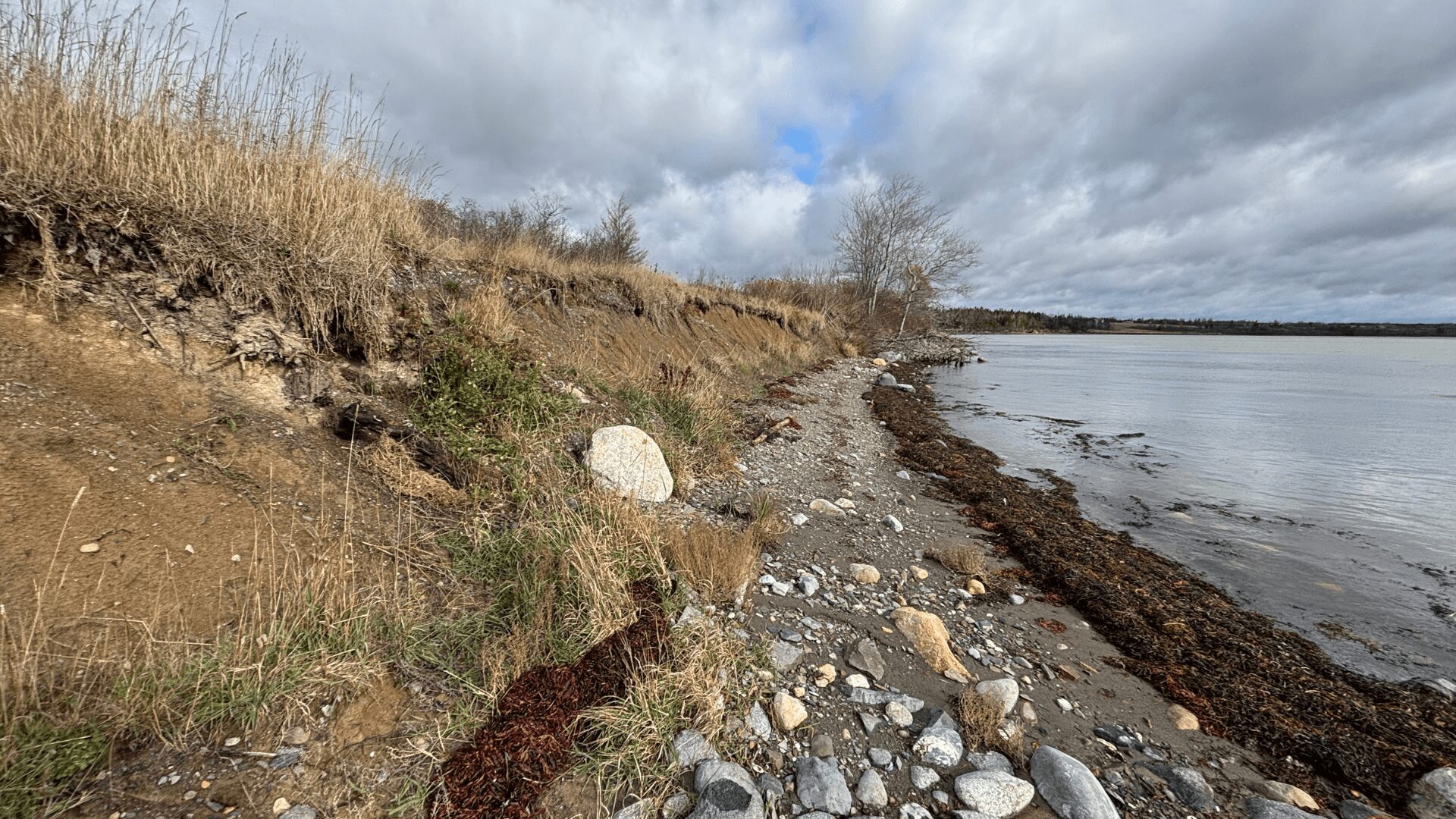
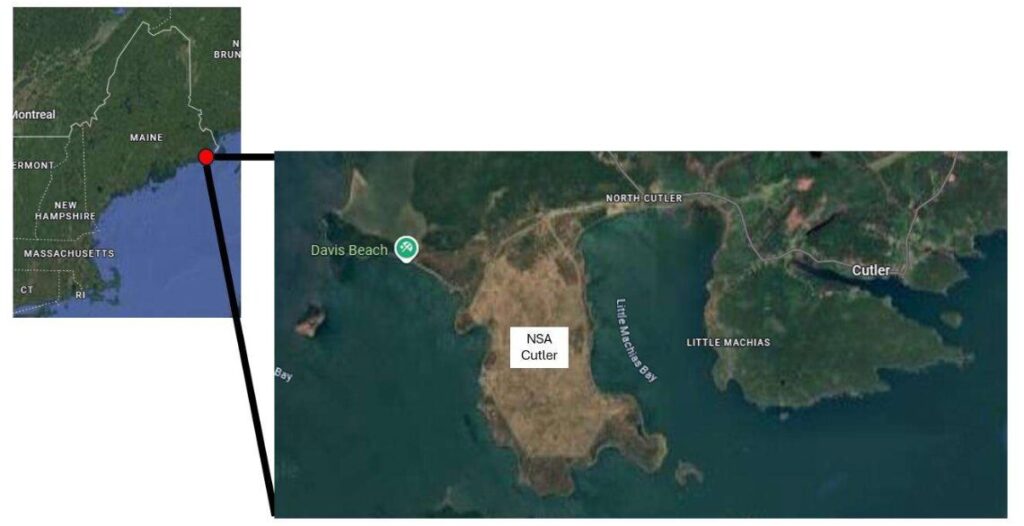
The site is located at Naval Support Area (NSA) Cutler in Cutler, Maine and is representative of a DoD military installation that operates in an environment that is frequently subject to extreme weather events and extreme variabilities in temperature and is located within the Gulf of Maine with a high (~4 meters) tidal range (Figure 1). This naval installation is responsible for relaying critical military communications in the Atlantic Ocean, Arctic Ocean, and Mediterranean Sea. However, weather-related events (e.g. coastal storms, storm surge, and high winds resulting in flooding and erosion) threaten the installation’s infrastructure, and the Navy must develop innovative interventions to cost-effectively reduce risks to military readiness.
The use of NHI, alone or in conjunction with conventional engineered structures, where appropriate, offers opportunities for reducing risks from natural hazards – strengthening installation and infrastructure through installation resilience. NHI also promotes sustained resilience by preserving operational capability under changing conditions and changing infrastructure needs while also protecting natural resources that are essential to the protection of the installation’s assets. While use of NHI at installations located in temperate regions of the U.S. (e.g., southeastern region of continental U.S.) has gained considerable acceptance, use of NHI at installations located in extremely harsh environments (e.g., northeastern-most region of continental U.S.) has not been pursued. Expanding applications of NHI technologies and practice, to include the extreme northeastern region of the U.S., would be advantageous for the previously stated reasons while also diversifying and expanding the arsenal of interventions that could be applied to reduce the risks from weather-related events.
Review CSO Solicitation document for additional background information such as a list of modeling outputs, information, and data associated with the project site that will be provided to the successful vendor for use project conceptualization.
Project Manager
Environmental Laboratory (EL), U.S. Army Engineer Research and Development Center (ERDC)
Objectives
The primary objectives are to identify organizations capable of:
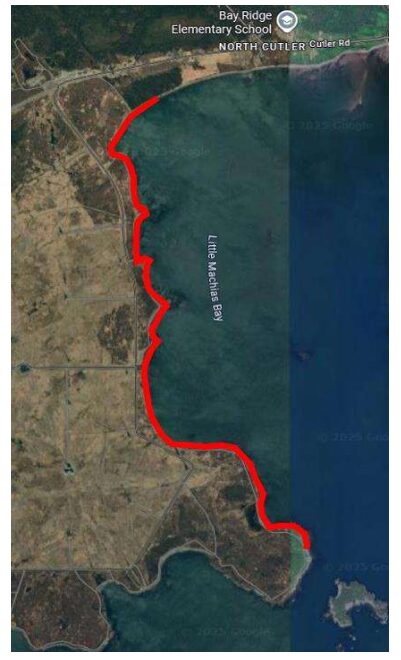
- Developing an innovative NHI application for the NSA Cutler shoreline that will successfully reduce impacts derived from the extreme weather events that frequent this region of Maine’s coastline. The coastline located within the project area is approximately 3.1 miles in length (Figure 2) and the total project area is approximately 170 acres (Figure 3). It is anticipated that 60% design concepts produced through this study would include, but would not be limited to:
- combinations of NHI and conventional infrastructure for the purpose of fortifying and improving the entire length of the shoreline illustrated in Figure 2;
- where applicable, innovative approaches for design and placement of culverts and/or other water conveyance features within the project area;
- where applicable, create designs for placement of repaired and/or segments of a new security road within the project area. In some instances, it’s possible the preferred alternative design may illustrate the abandonment of an existing security road with implementation of a novel approach for conducting security patrols; and
- designs that include restoration of damaged terminal anchors and/or repositioning of existing terminal anchors would be expected as part of the 60% design product. At present there are approximately 6 terminal test ends and anchors that have been directly impacted because of coastline erosion experienced at the installation. In total, there are 96 terminal end/anchors within the project area that need to be evaluated for repositioning depending on the shoreline stabilization design(s) that are selected.
- Developing innovative method and expedited path for pursuing construction of the proposed NHI through the exploration and identification of a variety of NHI geometries and forms that a) achieve Navy-approved, risk reduction thresholds and b) incorporate input from representatives of Federal and state agencies with purview over regulatory authorities applicable to NSA Cutler and the part of Maine’s coastline and waters where this NHI would be constructed (Figure 1).
- Generating estimated construction and maintenance cost for the proposed NHI and conventional infrastructure project based on 60% designs for preferred alternative.
- Completing draft permit applications for the proposed NHI and conventional infrastructure project with applicable state and Federal agencies in order to facilitate future construction of the project (construction is not included in this IPR).
While a final decision on the preferred alternative plan and design concept(s) will ultimately be determined based on several factors including, but not limited to: a) resource agency input, b) project cost, c) estimation of NHI performance, and d) projected NHI maintenance requirements, it is anticipated that the overall project design will consist of approximately 40 – 60% NHI.
Requirements
ERDC invites pre-proposals that must meet the following eligibility and other requirements:
- The applicant team shall comprise a range of competencies required for development of NHI and conventional infrastructure along with expertise to evaluate anticipated performance of the proposed intervention. Example team representatives include, but are not limited to: field practitioners with experience applying large scale NHI interventions in a diverse number of coastal landscapes and settings; scientists and engineers with experience quantifying engineering performance of NHI and conventional infrastructure; and personnel with expertise developing state and Federal permit applications (and all supporting permit application exhibits) for NHI projects to include conversations, presentations, and negotiations with respective agency representatives.
- Applicants are encouraged to submit evidence of previously successful efforts that include, but are not limited to: 1) development of NHI project concepts and designs, 2) successful acquisition of Federal and state permits in association with NHI, and 3) successful construction of NHI projects.
- Applicant team should be knowledgeable about Federal and state regulatory permitting that governs the placement of NHI and conventional infrastructure in Maine’s coastal landscapes. Knowledge and experience with procuring environmental permits for work conducted at military installations is also required.
- Development of the NHI and conventional infrastructure intervention(s) must consider existing and future conditions of Little Machias Bay and the landscape that comprises and surrounds the NSA Cutler installation.
- Applicants should submit evidence that highlight previous work pursuing innovative NHI strategies in cold regions and/or other extreme weather environments (e.g., Arctic and sub-Arctic environments).
- Applicants are responsible for conducting work under applicable laws and regulations and obtaining all necessary federal, state, and local permits for any proposed sampling or testing needed to better understand the dynamics of the Little Machias Bay and coastline at NSA Cutler. Applicants are also responsible for coordination with ERDC, responsible USACE Districts, NSA Cutler, and State of Maine agencies, and other local and Federal agencies, as required, for an assessment of environmental effects of any proposed action at the installation.
Not required, but highly desired:
- Applicants are encouraged to describe any additional field work or data collection activities that would be pursued in support of achieving outcomes described in the section titled, ‘Desired End-state’. Please see section titled, “Background” for a listing of information and data that will be provided to the successful vendor(s).
- Applicants are encouraged to describe how the proposed activities leverage existing Federal and state data and/or any ongoing programs and activities of Federal and State agencies.
- Applicants are encouraged to identify quantitative and qualitative success criteria for each project task and objective; identification of go/no-go decision points over the proposed project timeline are also desirable.
Applicants must be registered on SAM.gov. The Purpose of Registration on SAM.gov should reflect all awards.
Note: Submissions should NOT include confidential or proprietary details.
Estimated Government Funding Profile
Up to $2,100,000 may be available for all awards under this announcement. The Government may elect to issue multiple awards.
All resultant contracts will be firm-fixed price. All items, technologies, and services (including research and development) procured via this CSO are treated as commercial. Applicants from universities and/or non-profit organizations should be aware that commercial clauses will be integrated into the award and should coordinate proposals with associated legal counsel prior to submission.
Estimated Period of Performance
30 months maximum for multi-year awards. Multi-year proposals may be submitted. Based on the proposals received, the Government reserves the right to award the full period of performance for selected projects or only the initial year(s).
Desired End State
- Development of coastal shoreline intervention(s) consisting of a combination of NHI and conventional infrastructure that can be placed along the shoreline at NSA Cutler. Design of the intervention should take into consideration parameters such as sediment transport, wave energy, inundation, erosional forces, and sediment dynamics affecting the shoreline under both current and future conditions.
- Delivery of 60% design drawings for a combination of NHI and conventional infrastructure that depict project baseline conditions, proposed design details (i.e. layout, dimensions, material selection, etc.), plan views and cross sections, and draft project specifications, and a preliminary engineering cost estimate (for project implementation planning purposes). Throughout the process, designs will be informed and updated based on reviews and inputs provided by Federal and state resource agency representatives, U.S. Navy representatives, and ERDC representatives.
- Completion of permit applications that will be required by applicable state and Federal agencies in order to construct the project at some point in the future. Regulatory agency (pre-permit application) meetings will be scheduled in coordination with US Navy to introduce the project to regulators and obtain early feedback on proposed NHI concepts. Following that, permit applications will be developed for US Navy review and updated based on incorporation of any review comments. Compliance documentation and associated studies pertaining to such activities as environmental assessments (EAs), environmental impact statement (EIS) or national environmental policy act (NEPA)-related analysis are not required as part of this effort.
- Information concerning estimated construction and maintenance cost for the preferred designs for the NHI and conventional infrastructure that would be placed along the shoreline at NSA Cutler. Cost estimates will be based on 60% designs for the preferred alternative(s) that created and depicted in permit applications.
- Final project report documenting the steps and approach taken to identify proposed NHI and conventional infrastructure design(s).
Evaluation Criteria
Submissions will be evaluated based on the criteria described in the CSO Solicitation document.
Evaluations will be conducted by ERDC subject matter experts.
All resultant contracts will be firm-fixed price. All items, technologies, and services (including research and development) procured via this CSO are treated as commercial. Applicants from universities and/or non-profit organizations should be aware that commercial clauses will be integrated into the award and should coordinate proposals with associated legal counsel prior to submission.
Notional Project Schedule
Proposed project milestones include:
| December 4, 2025 | Submissions Open |
| December 14, 2025 (Sunday) | Question Period Ends |
| January 16, 2026 | Submissions Close (Deadline Extended) |
*If needed; dates may vary to accommodate project team and participant availability. The government may accelerate the pre-proposal review/feedback timeline, and therefore also require earlier delivery of full proposals.
Project Security Classification
Unclassified
How to Participate
Qualified parties may submit by completing a submission form and uploading required documentation as defined in the CSO Solicitation document.
1. Review CSO Solicitation document
2. Review FAQs
3. Complete the submission form
Submission Instructions:
This solicitation is issued consistent with the authority granted to the U.S. Army Engineer Research and Development Center (ERDC) through the establishment of its Commercial Solutions Opening (CSO), W912HZ26SC002. Submissions must follow the requirements as detailed in the CSO Solicitation document.
Questions:
Interested parties may submit questions using this form until Sunday, December 14, 2025.
Submissions must meet stated requirements and be received no later than 10:00 am CT on Friday, January 16, 2026.
ERDC-EL is conducting this project announcement on a full and open basis and intends to award contracts in accordance with FAR part 12 and the FAR part that is deemed most appropriate for the solution proposed (i.e. FAR part 13, 15, and/or 35). Award may be made using any appropriate FAR-based contracts in accordance with applicable authorities that are effective at the time of the award.